Shandong Xiangying New Materials Technology Co., Ltd.

Leave Your Message
0%

China’s Wpc Exterior Wall cladding market? It’s grown fast, no question. But supplier quality is still all over the place. This guide looks at dependable manufacturers, product specs, and the real-world buying risks you’ll want to know about. WPC exterior wall cladding can give you that warm timber look, less upkeep, and decent resistance to moisture and insects. That said, how well it performs depends on the formulation, installation, ventilation, and the climate it’s exposed to.

Dr. Michael Green, a building-envelope specialist, once put it this way: “A facade must perform before it performs visually.” That idea really matters when you’re comparing Chinese suppliers. A good-looking sample can hide a weak core, inconsistent color, or a poor fixing system. So a professional buyer should ask for technical data, water absorption results, dimensional stability records, UV-aging evidence, and fire-performance documentation. Factory visits are worth it too—they reveal a lot. Keep an eye on the extrusion lines, storage areas, quality-control process, and packaging protection.

Companies like Foshan MexyTech Co., Ltd., Anhui Guofeng Wood-Plastic Composite Co., Ltd., and Jiangsu Coowin New Materials Co., Ltd. might suit different project needs. But don’t judge their capabilities by websites alone. Ask about batch consistency, warranty limits, replacement procedures, and export experience. Wpc Cladding Exterior Wall systems also need the right subframe spacing and drainage gaps. Tiny installation mistakes can turn into big headaches later.

This guide isn’t a perfect ranking. Supplier data changes, and published claims need independent checking. The safest choice usually combines verified testing, clear communication, stable production, and realistic technical advice. Good cladding should still look convincing after it’s installed—not just in a catalog.
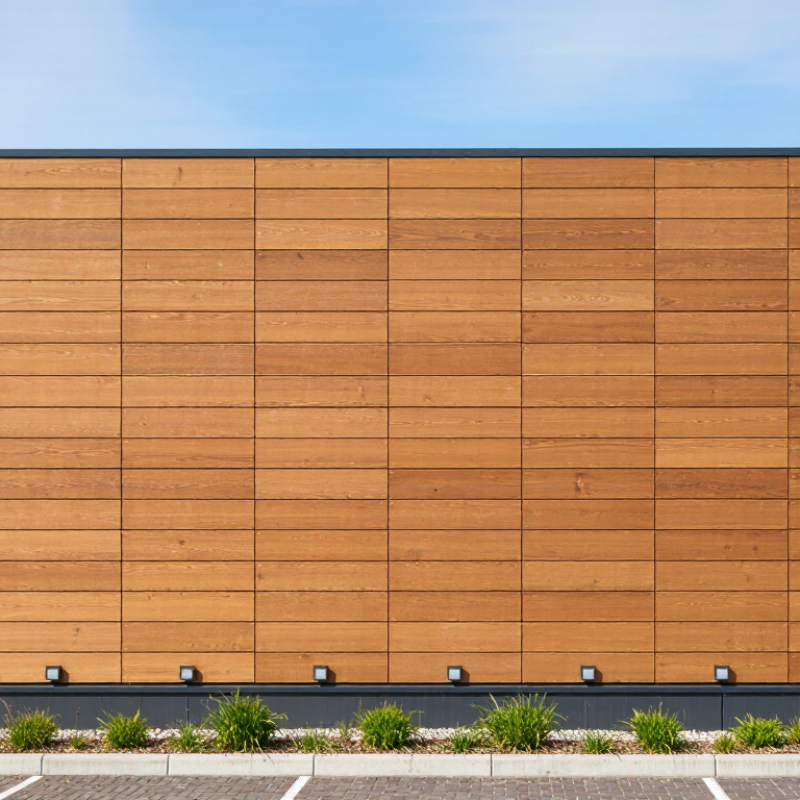
China Top WPC Exterior Wall Cladding Suppliers Guide

WPC Exterior Wall Cladding: Definition, Structure, and Main Applications

Wpc Exterior Wall Cladding is an engineered exterior panel made from wood fibers, recycled polymers, and performance additives. It resembles timber but resists moisture more consistently than untreated wood. The surface may be embossed, brushed, or capped with a protective polymer layer. Profiles commonly include hollow or solid boards, hidden clips, starter rails, and corner trims. This system creates a ventilated rain-screen when installers leave a drainage cavity behind panels.

Its structure matters on real projects. A stable subframe, corrosion-resistant fixings, and controlled expansion gaps help panels handle temperature changes. In humid coastal areas, installers should inspect cut edges and seal exposed sections according to technical instructions. The material is not maintenance-free. Dust, algae, and color variation still appear, especially beneath roof overhangs. That detail is often missed. Performance can also vary between factories.

Applications include villas, apartment façades, balconies, garden rooms, commercial entrances, and acoustic screening. It suits renovation projects where lightweight panels reduce pressure on existing walls. For buyers comparing China-based suppliers, request test data, section drawings, fire classification, weathering results, and installation tolerances. Ask for physical samples, not only catalog images. A darker finish can heat faster in direct sun. Local climate and wall movement must guide the specification.

Key Benefits and Limitations of WPC Exterior Wall Cladding

China Top WPC Exterior Wall Cladding Suppliers Guide

WPC exterior wall cladding combines wood fibers with recycled polymer. It offers a warm appearance without regular painting. Experienced installers value its resistance to moisture, insects, and surface cracking. It also cleans easily after dusty weather. However, WPC is not maintenance-free. Dark colors may fade under strong sunlight, especially on south-facing walls. Thermal movement can also create gaps if installers ignore expansion joints.

Field experience shows that installation quality often matters more than the panel itself. A reliable China supplier should provide material specifications, installation drawings, and test reports. Check water absorption, slip resistance, fire performance, and color stability. Ask whether the product suits your local climate. Coastal air, freezing winters, and intense heat can produce different results. One assumption deserves caution: heavier panels are not automatically stronger. Poor drainage behind a thick panel can still cause long-term problems. Confirm the substructure, fastening method, and replacement process before ordering. Samples should remain outdoors for several weeks, not just in a showroom.

Tips: Request batch consistency records and inspect panel edges. Leave movement gaps around windows and corners. Use stainless fasteners where humidity is high. Keep spare panels for future repairs. A small mistake in spacing becomes visible across an entire façade. Test first.

How to Evaluate China’s WPC Cladding Suppliers

Evaluating China’s Wpc Cladding suppliers requires more than comparing online prices. Request factory videos, production photos, and recent project references. A reliable supplier should explain material composition, extrusion methods, and quality controls clearly. Visit the facility when possible. Look closely. Check whether raw materials are stored dry and protected from contamination.

Ask for physical samples of Exterior Wall Cladding Wpc before discussing large orders. Examine color consistency, surface texture, edge accuracy, and hidden fastening points. Test several boards for bending, moisture exposure, and dimensional stability. Technical documents should state density, fire performance, weather resistance, and applicable testing standards. Do not accept vague claims such as “maintenance-free” without supporting evidence.

Supplier communication also reveals practical experience. Request a detailed quotation covering tooling, packaging, inspection, replacement policies, and delivery terms. Confirm production capacity during your required season, not only during a sales call. Independent inspection can verify quantity and surface defects before shipment. Ask again. Small gaps in documentation may become expensive installation problems. I have found that sample quality sometimes exceeds regular production quality, so written specifications and retained samples matter. A dependable supplier welcomes technical questions, admits limitations, and adjusts recommendations to your climate rather than promising one solution for every building.

China Top WPC Exterior Wall Cladding Suppliers Guide: How to Evaluate Suppliers

Recommended evaluation weighting for comparing WPC exterior wall cladding suppliers

Product quality and weather resistance receive the highest weighting because exterior WPC cladding must maintain dimensional stability, color retention, and surface performance during long-term outdoor use. Buyers should also verify compliance documentation, production capacity, delivery reliability, warranty terms, and after-sales support before making a final decision.

Important Product Specifications and Quality Certifications

China Top WPC Exterior Wall Cladding Suppliers Guide
Important Product Specifications and Quality Certifications

Selecting a Chinese WPC exterior wall cladding supplier requires more than checking surface color. The 2024 Grand View Research report identifies construction as a major WPC application, increasing pressure on suppliers to prove durability. Ask for documented density, profile dimensions, water absorption, flexural strength, and thermal expansion. These values should match the intended climate and fixing system.

For outdoor performance, review testing under ASTM D7031, ASTM G154, and ASTM D2244. These methods help assess weathering, ultraviolet exposure, and color change. EN 13501-1 fire classification is important for projects serving European markets. ISO 9001 certification indicates a controlled quality system, but it does not guarantee every batch is perfect. Request recent third-party reports, production dates, and batch traceability.

A practical inspection should check tongue-and-groove accuracy, edge straightness, surface uniformity, and hidden fixing compatibility. A 2023 industry review by the Freedonia Group notes that maintenance reduction remains a key reason for choosing composite materials. Still, installation errors can cause warping or water entry. Some suppliers provide impressive certificates but weak site guidance. That deserves careful questioning. A small sample should face outdoor exposure before large-scale ordering. Five days are not enough. A longer trial is wiser.

Manufacturing, Customization, Pricing, and Minimum Order Factors

China Top WPC Exterior Wall Cladding Suppliers Guide

China’s WPC exterior wall cladding sector benefits from established extrusion capacity and dense supplier networks. Grand View Research estimated the global wood-plastic composites market at about USD 7.5 billion in 2023, with strong growth expected through 2030. This demand supports products such as 3d Fluted Wpc Exterior Wall Cladding for villas, hotels, and commercial façades.

Manufacturing quality depends on wood-fiber content, polymer selection, extrusion temperature, and profile cooling. Experienced suppliers should provide production samples, dimensional tolerances, water-absorption results, and color-fade testing. ASTM D7031 and ISO 4892-3 are useful references for evaluating composite performance and weather exposure. Still, test results can vary between batches. Buyers should verify recent reports, not only attractive certificates.

Customization usually covers length, surface texture, color, fire performance, and concealed fixing systems. Deep flutes may increase tooling costs and packaging volume. Pricing must include molds, surface treatment, corner trims, cartons, inland transport, and export handling. Small orders often carry higher unit costs because factories spread setup expenses across fewer panels. Many suppliers set minimum orders by color or production run, commonly using pallet-based quantities rather than single cartons. A practical request should state project area, panel dimensions, target finish, delivery port, and required test standards. Vague inquiries invite vague quotations.

China Top WPC Exterior Wall Cladding Suppliers Guide - Manufacturing, Customization, Pricing, and Minimum Order Factors

Evaluation Dimension Typical Industry Data What Buyers Should Check Key Cost or Order Factor
Common Material Composition Wood fiber or wood flour combined with thermoplastic resin, commonly HDPE, PVC, or PP, plus additives and colorants. Confirm the resin type, recycled-content percentage, wood-fiber content, additive package, and whether the formulation is designed for exterior exposure. Resin type, recycled content, additives, and surface treatment can significantly affect cost and durability.
Manufacturing Process Most exterior WPC wall cladding is produced through extrusion, followed by cooling, cutting, embossing, co-extrusion, or surface coating. Review extrusion-line capability, profile tolerances, production controls, batch consistency, and the supplier’s ability to maintain color and dimensions. Complex profiles, co-extrusion, and secondary finishing usually increase tooling and unit costs.
Typical Board Dimensions Common widths are approximately 140–220 mm, thicknesses are approximately 20–35 mm, and standard lengths are often 2.8–5.8 m. Ask whether dimensions are nominal or actual, and verify allowable dimensional tolerances after temperature changes. Longer lengths and non-standard widths may require special production planning and higher freight costs.
Surface Finishes Frequently available finishes include wood grain embossing, brushed texture, sanding, matte texture, and capped or co-extruded surfaces. Request physical samples and compare texture depth, color uniformity, scratch resistance, and surface adhesion. Deep embossing, multi-color effects, and capped layers generally add processing cost.
Color Customization Standard production commonly includes several brown, grey, charcoal, and natural wood-tone colors. Custom colors may be matched to a reference sample or color code. Confirm the color approval process, acceptable color deviation, weathering expectations, and whether the same color can be repeated in future batches. Custom color development may require a minimum batch, laboratory matching, or a color-development charge.
Profile Customization Suppliers may offer hollow, solid, slatted, grooved, ribbed, and interlocking exterior wall profiles. Check CAD drawing approval, wall thickness, internal ribs, drainage design, clip compatibility, and installation orientation. New extrusion dies commonly require a tooling charge and a minimum production quantity.
Indicative Factory Price For standard WPC exterior wall cladding, an indicative factory-level range is approximately USD 12–35 per square metre before freight, taxes, installation, and accessories. Compare quotations using the same material composition, dimensions, surface finish, packaging method, and delivery terms. Price varies with resin type, profile weight, cap layer, order quantity, packaging, and international freight.
Custom Product Price Premium Custom colors, profiles, co-extruded caps, and special textures may add approximately 5%–30% or more compared with a standard product. Request separate pricing for tooling, sample development, color matching, testing, and mass production. Small orders usually have a higher unit cost because fixed development and setup expenses are spread over fewer units.
Typical Minimum Order Quantity Standard profiles may be available from approximately 100–300 square metres, while custom profiles or colors may require approximately 500–1,000 square metres or more. Confirm whether the MOQ applies per color, profile, finish, length, container, or total order. MOQ is often determined by extrusion setup time, raw-material batching, packaging requirements, and tooling utilization.
Sample Policy Small physical samples are commonly available for evaluation. Full-length samples or customized samples may involve freight or development charges. Evaluate color, texture, straightness, locking fit, cut quality, surface adhesion, and visible defects before approving production. Sample fees may be refundable after a confirmed bulk order, depending on the supplier’s commercial terms.
Mechanical Performance Relevant performance indicators include flexural strength, impact resistance, screw-holding performance, dimensional stability, and profile stiffness. Request test reports that identify the tested product, test method, laboratory, date, and conditioning procedure. Thicker walls, internal reinforcement, higher-density formulations, and solid profiles generally improve stiffness but increase weight and cost.
Weather and UV Resistance Exterior-grade products normally use UV stabilizers, pigments, and weather-resistant additives. Color change and surface aging can still occur over time. Ask for accelerated weathering data, color-change limits, exposure conditions, and warranty exclusions related to climate and installation. Higher UV-additive content, premium pigments, and protective cap layers can increase the product price.
Moisture and Rot Resistance WPC does not support biological rot in the same way as untreated timber, but moisture can enter through cut ends, joints, or damaged surfaces. Review water absorption data, edge-sealing guidance, drainage details, ventilation requirements, and recommended installation gaps. Cap layers and improved edge protection may increase material cost while reducing maintenance risk.
Fire Performance WPC fire behavior depends on the polymer, wood content, additives, profile geometry, and installation system. Fire classification is not universal across all products. Obtain project-specific fire test reports and confirm that the tested thickness, profile, mounting method, and coating match the proposed application. Fire-retardant formulations and certified systems can increase material, testing, and compliance costs.
Installation System Typical systems use stainless-steel or corrosion-resistant clips, screws, starter profiles, corner trims, and ventilation gaps. Confirm clip spacing, substructure requirements, expansion gaps, corner details, fastener grade, and compatible accessories. Accessories may be priced separately and can materially affect the total installed cost.
Packaging and Loading Boards are commonly bundled with protective film, cartons, edge protection, or pallets. Loading quantity depends on profile dimensions and container configuration. Specify bundle quantity, pallet limits, moisture protection, labeling, loading method, and damage-prevention requirements. Improved packaging reduces damage risk but increases packaging material, labor, and shipping volume.
Export Documentation Common documents include commercial invoice, packing list, bill of lading, certificate of origin when required, and product or test documentation. Confirm HS classification, country-specific import requirements, wood-content declarations, and any chemical or building-product compliance documents. Destination regulations and required testing can add lead time and compliance expenses.
Typical Production Lead Time Standard items may require approximately 15–30 days after order confirmation. Custom tooling, colors, or testing can extend the schedule to approximately 30–60 days or more. Request a written timeline covering deposit, tooling, sample approval, production, inspection, and shipment booking. Lead time is influenced by factory capacity, raw-material availability, customization, holidays, and inspection requirements.
Quality-Control Points Important checks include dimensions, weight per metre, color consistency, surface defects, profile straightness, moisture condition, packaging, and quantity. Use an approved sample, agreed tolerances, inspection checklist, and pre-shipment inspection procedure. Third-party inspection, additional testing, and stricter tolerances may create extra costs but reduce receiving risk.
Warranty Considerations Exterior WPC warranties commonly address manufacturing defects, but coverage periods and exclusions differ by product and supplier. Review warranty duration, geographic exposure limits, installation requirements, maintenance obligations, color-fade provisions, and claim procedures. Warranty validity may depend on approved accessories, correct ventilation, permitted fixing methods, and documented installation.

Indicative ranges are general industry planning references for supplier comparison. Final specifications, prices, minimum order quantities, test results, and delivery terms should be confirmed in a written quotation for the selected product.

Export Services, Installation Support, and Supplier Selection Criteria

Choosing a China Wpc Cladding Exterior Wall supplier requires more than comparing catalogue prices. Grand View Research estimated the global wood-plastic composites market at USD 7.12 billion in 2023. Its report also forecasts strong growth through 2030. This demand makes export capability especially important. Ask suppliers for commercial invoices, packing lists, moisture protection details, and clear Incoterms. Container loading photos can reveal careless handling before shipment.

Installation support should include CAD drawings, fixing schedules, cutting guidance, and advice on expansion gaps. Experienced suppliers explain substructure spacing and local fire requirements. They should also provide technical datasheets, batch records, and independent test reports. ASTM or EN test references are useful, but certificates must match the actual profile supplied. A supplier may offer a long warranty. That alone proves little. Request project references from similar climates and inspect completed façades when possible.

Tips: Compare three quotations using the same specifications. Check profile weight, surface thickness, accessories, and replacement policies. Confirm whether technical support responds in your time zone. Ask for a sample installed outdoors for several weeks. It is not a laboratory test, but it can expose colour changes, water marks, or weak clips. I have seen attractive samples fail because installers guessed the joint spacing. Supplier selection is never perfectly tidy. Leave room for verification, questions, and a second review before production.

FAQS

What is WPC exterior wall cladding?

It is an engineered panel made from wood fibers, recycled polymers, and performance additives. It resembles timber and resists moisture better than untreated wood. Not waterproof forever.

How is WPC cladding installed?

Panels attach to a stable subframe with corrosion-resistant fixings. Hidden clips, starter rails, and corner trims support alignment. A drainage cavity behind the panels creates a ventilated rain-screen. Expansion gaps must follow technical instructions.

Where can WPC exterior cladding be used?

Common uses include villas, apartment façades, balconies, garden rooms, and commercial entrances. It also suits acoustic screens and renovation projects. Lightweight panels can reduce pressure on existing walls.

What maintenance does WPC cladding require?

Clean dust and algae when they appear, especially beneath roof overhangs. Inspect cut edges in humid coastal locations. Seal exposed sections as instructed. Color variation still happens. This detail is easy to miss.

Which technical documents should buyers request?

Request density, profile dimensions, water absorption, flexural strength, and thermal expansion data. Ask for weathering, ultraviolet, and color-change reports. Fire classification may matter for European projects. Recent third-party reports are more useful than certificates alone.

Does ISO 9001 guarantee perfect product quality?

No. It indicates a controlled quality system, not flawless batches. Ask for production dates and batch traceability. Inspect physical samples. Paperwork can look better than the panels.

What affects customization and pricing?

Suppliers may customize length, texture, color, fire performance, and concealed fixing systems. Deep flutes can increase tooling and packaging costs. Include molds, trims, cartons, inland transport, and export handling in the quote. Small orders usually cost more per unit.

How should buyers evaluate a physical sample?

Check tongue-and-groove accuracy, edge straightness, surface uniformity, and fixing compatibility. Place a sample outdoors before ordering large quantities. Five days is not enough. A longer trial is wiser, though it requires patience.

What information should a purchase inquiry include?

State the project area, panel dimensions, target finish, delivery port, and required test standards. Mention the local climate and expected wall movement. Ask about minimum order quantities by color or production run. Vague requests create vague quotations.

Conclusion

This guide explains Wpc Exterior Wall Cladding, including its composite structure, typical surface finishes, and common applications in residential, commercial, and outdoor architectural projects. It reviews the material’s main advantages, such as moisture resistance, dimensional stability, low maintenance, and design flexibility, while also discussing limitations related to thermal movement, installation conditions, and long-term performance.

The article also provides a practical framework for evaluating suppliers in China. It covers product specifications, testing methods, quality certifications, manufacturing capabilities, customization options, pricing, minimum order quantities, export experience, packaging, delivery, installation guidance, and after-sales support. By comparing these factors carefully, buyers can identify reliable suppliers, confirm product suitability for their climate and project requirements, control overall costs, and establish a smoother procurement process.
Sophia

Sophia

Sophia is a dedicated marketing professional with over a decade of experience in the industry. She is deeply committed to the company's philosophy of service and sincerity, believing that trust and support are the foundations of mutual benefit and win-win cooperation. With her extensive knowledge......
Previous Why Choose WPC Wall Panels for Interior Walls?