Shandong Xiangying New Materials Technology Co., Ltd.

Choosing Paneles Wpc for projects worldwide in 2026? It's not simply a matter of comparing colors, prices, and surface textures. Grand View Research pegged the global wood-plastic composites market at about USD 7.1 billion back in 2023. Their forecast? Continued growth through 2030. Fortune Business Insights reports a similar kind of expansion, backed by construction, landscaping, and outdoor applications. Forecasts don’t always agree, though. And honestly? That difference is worth a closer look.
Dr. Amar K. Mohanty, a leading researcher in biocomposites, has said it well: “Bio-based materials must deliver performance, not just a greener story.” And honestly, he’s got a point. If you’re buying these materials, don’t just accept the green story—check the details. Look at wood-fiber content, polymer type, moisture absorption, how much it moves with heat, fire performance, and whether recycled material can be traced. For wood-plastic composites, ASTM International standards D7031 and D7032 offer useful testing guidance. And for European projects, EN 15534 can help with evaluations. Just so we're clear, these documents don't replace local building requirements.
Things change depending on where you are. A Paneles Wpc facade near a humid coastline might have to handle salt, UV exposure, and repeated expansion. The same panel in a dry warehouse? It could act completely differently. So before you sign a global contract, it's worth checking batch consistency, fixing systems, installation tolerances, and replacement access. And ask for third-party test reports—not just factory brochures.
Honestly? The small details matter.
Going cheap on panels? That can come back to bite you later with higher logistics and maintenance costs. Still, no report is ever going to wipe out every bit of uncertainty. Even seasoned procurement teams can miss things like color fading or corroded connectors. So the smart move is to blend published market data, verified testing, what installers have actually seen, and a realistic look at the project's risks.
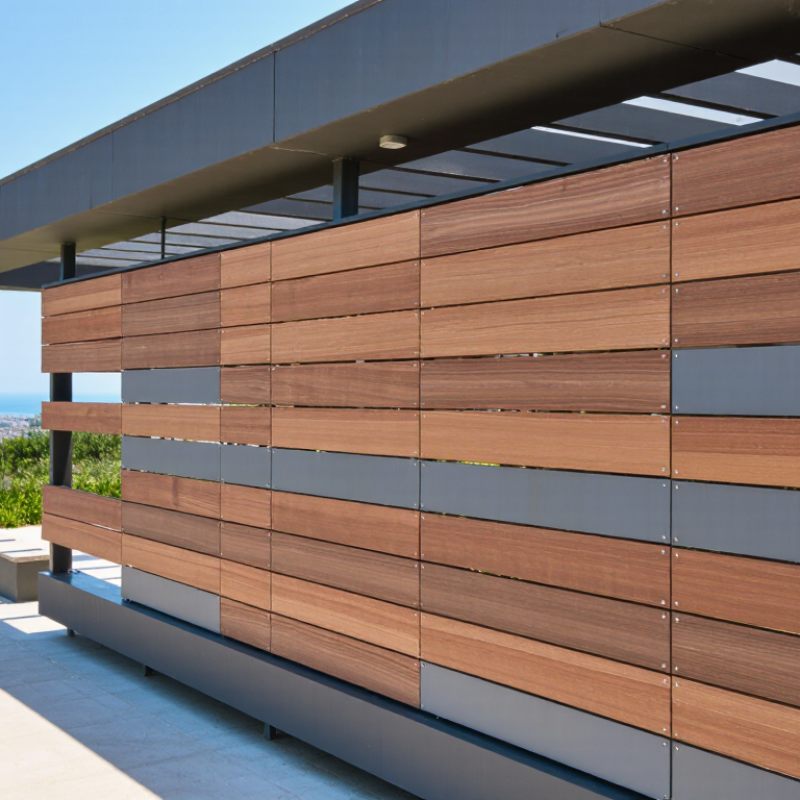
Wood-plastic composite (WPC) panels combine wood fibers with thermoplastic polymers and performance additives. The result is a manufactured panel with a timber-like appearance and more consistent dimensions. Unlike solid wood, WPC usually absorbs less moisture, which helps in humid façades, partitions, ceilings, and sheltered outdoor areas.
In global construction, Wpc Panels connect design expectations with practical performance. A project team can specify similar colors and textures across several countries. The panels also support efficient cutting and repeatable installation when factory tolerances are controlled. However, WPC is not maintenance-free. Surface fading, thermal movement, and local temperature changes still require attention. A dark panel beside a sunlit window may expand noticeably during the day.
Selection should begin with the building location, not the catalogue image. Engineers should review moisture exposure, fire classification, slip or impact requirements, UV resistance, and expected service temperature. They should also check test methods and certificates accepted in the target market. A panel suitable for a dry interior may perform poorly near coastal air or frequent rainfall. That assumption can fail.
Site experience matters, too. Leave the manufacturer’s recommended movement gaps, protect cut edges where required, and keep panels dry before installation. Confirm local recyclability and disposal routes early, because polymer content can complicate end-of-life handling. WPC can be a reliable global construction material, but only when its composition, testing, climate response, and installation details match the project.
WPC panels are wood-plastic composites made from wood fiber or flour, thermoplastic polymers, and additives. They are used in interior wall systems, exterior cladding, decking, and other construction applications because they can combine visual wood characteristics with moisture resistance, dimensional stability, and relatively low maintenance requirements.
The chart shows representative midpoint densities from commonly specified WPC panel ranges: interior Wall Panels typically fall around 500–800 kg/m³, exterior cladding around 800–1,400 kg/m³, and decking around 900–1,300 kg/m³. Density is only one selection factor; global projects should also verify fire performance, UV stability, water absorption, thermal movement, slip resistance, installation requirements, and local building regulations.
Choosing Paneles De Pared Wpc for global projects starts with the project brief. Define wall height, fixing method, traffic level, cleaning needs, and expected service life. A hotel lobby needs different performance from a ventilated exterior façade. Record these details before comparing panel profiles or surface finishes. Small omissions can create expensive changes later.
Climate can change the specification quickly. In coastal areas, salt air and high humidity demand stable materials and corrosion-resistant accessories. In hot regions, strong sunlight may cause fading or thermal movement. Cold climates require attention to expansion gaps and freeze-thaw exposure. Request test data for water absorption, UV resistance, impact strength, and dimensional stability. Use a physical sample outdoors when possible. It reveals problems that brochures may hide.
Building codes are not optional design preferences. Check local requirements for fire reaction, smoke development, wind loading, moisture control, and accessibility. A panel suitable for an interior room may fail an exterior fire assessment. Ask for current, traceable documentation, including installation instructions and test standards. Coordinate with a qualified local code professional because requirements vary between countries and even cities. A first specification is rarely perfect. Field conditions, subcontractor skills, or unavailable fixings may force revisions. Leave room for those realities without weakening the safety criteria.
Selecting WPC panels starts with the project environment, not the catalogue image. I have inspected panels near coastlines, balconies, and shaded courtyards. Moisture, salt air, heat, and daily movement changed the results. Wood-plastic composites with higher polymer content usually resist water better. However, excessive plastic can reduce natural texture and increase thermal expansion. Fiber-rich formulas may feel warmer, yet they need careful edge protection.
Panel structure matters during installation and long-term service. Solid panels offer stronger impact resistance for busy façades and public walkways. Hollow panels reduce weight, but internal ribs must be evenly formed. Uneven cavities can create weak fixing points. Check wall thickness, screw-holding strength, ventilation gaps, and expected temperature changes. For Paneles Wpc Exterior, installers should allow movement around joints. A tight installation may look clean on day one and warp later.
Surface finishes affect both appearance and maintenance. Embossed wood grain can hide small scratches better than a smooth coating. Brushed textures may collect dust in dry climates. Dark colors absorb more heat, especially on sun-facing walls. Matte finishes often reduce glare around hotels and residential terraces. I once preferred a deep walnut tone, but the sample became visibly hotter than expected. Small sample testing remains essential. Compare wet and dry surfaces, corner cuts, fastening marks, and color changes under direct sunlight. Suppliers should provide technical data, fire performance information, slip guidance where relevant, and batch consistency records.
Durability should be checked against the real site, not a showroom sample. For humid coasts, examine water absorption, mould resistance, and corrosion around fasteners. In colder regions, ask for freeze-thaw and dimensional stability data. Strong sunlight also matters. UV exposure can fade surfaces and make weak boards brittle. A small sample left outdoors for several months may reveal more than a polished brochure.
Fire safety needs careful interpretation. WPC is not automatically fireproof. Request tested reaction-to-fire results for the exact panel, thickness, coating, and fixing system. A wall assembly may perform differently from a loose sample. Check smoke production and burning droplets where local regulations require them. China Paneles Wpc suppliers should provide traceable laboratory reports, production dates, and quality-control records. Reports without clear test conditions deserve questions.
Environmental performance includes more than recycled content. Review the percentage and source of recycled polymers, wood fibres, additives, and packaging. Look for verified environmental product declarations, responsible material sourcing, and low-emission testing. Consider service life and repairability too. Replacing faded panels after five years weakens the environmental case. End-of-life recovery can be complicated when fibres, coatings, and polymers are bonded together. That detail is often overlooked. I would compare independent evidence, not promises, and record uncertainties before approving a global specification.
How to Choose Paneles WPC for Global Projects in 2026?
Supplier assessment should begin with evidence, not attractive samples. Request factory audit records, production capacity, batch traceability, and recent laboratory reports. Check dimensional stability, water absorption, slip resistance, and color retention. EN 15534 can support WPC performance evaluation, while EN 13501-1 or ASTM E84 may address fire behavior. Certification scope matters. A general ISO 9001 certificate does not prove product performance. Ask whether testing covers the exact profile, surface finish, and intended climate.
Calculate landed cost before comparing quotations. Include panels, packaging, inland transport, ocean freight, insurance, duties, storage, installation, and possible replacement pieces. UNCTAD reports that over 80% of global merchandise trade by volume moves by sea. That makes port congestion and freight changes financially important. The World Bank’s 2023 Logistics Performance Index also evaluates customs, infrastructure, shipment reliability, and delivery timeliness. A supplier with weaker documentation may create expensive delays, even with a lower factory price. Low price is not always value.
Use moisture-resistant packaging, pallet protection, and clear container-loading photos. Confirm minimum order quantities and spare-panel percentages. I usually allow extra material for cutting and color matching, but the correct allowance depends on the design. My first freight estimate is often wrong. Recheck it. Compare two shipping routes, not one. Obtain independent test verification when the project involves public buildings, coastal exposure, or strict fire requirements. Supplier communication should remain measurable, written, and easy to audit.
Global WPC demand is expanding across façades, ceilings, partitions, and outdoor structures. Grand View Research estimates the global wood plastic composites market will grow at about 7% annually through 2030. That growth increases specification risk. A panel suitable for a shaded balcony may fail beside a hot, coastal façade.
Select panels by exposure, not appearance alone. Check resin type, wood-fibre content, density, surface coating, and thermal movement. For Wholesale Paneles Wpc purchasing, request production tolerances and recent batch records. A 3 mm thickness variation can disrupt concealed clips and create visible joint lines. Small details matter.
Testing should match the installation environment. Ask for water absorption, flexural strength, screw withdrawal, impact, UV ageing, and fire classification reports. Use recognized methods, such as ASTM or EN procedures, and verify sample conditioning. The International Code Council highlights the importance of documented fire performance for building materials used in regulated assemblies. Do not accept a generic “weather resistant” statement.
On site, install a small mock-up first. Leave expansion gaps, expose one joint to direct sun, and inspect it after rain and temperature changes. In my experience, installers often underestimate dark-panel heat gain. That mistake is expensive. Reports from Fortune Business Insights also indicate continued WPC demand in construction applications, but market growth does not guarantee equal product quality. One weakness remains: laboratory results may not represent careless handling, poor drainage, or salt-laden air. Specify maintenance access, replacement procedures, and acceptable colour variation before ordering.
| Selection Dimension | Project Requirement | Recommended Specification or Screening Range | Verification Method | Installation and Procurement Note |
|---|---|---|---|---|
| Intended application | Interior wall, ceiling, sheltered exterior, or exposed façade panel | Match the panel formulation, surface finish, fasteners, and backing system to the exposure category. | Review the manufacturer’s technical data sheet and project exposure assessment. | Do not use an interior-grade panel in an exposed façade or continuously wet location. |
| Panel composition | Wood-fibre or wood-flour composite with a thermoplastic polymer matrix | Specify the polymer type, wood content range, additives, surface cap, pigments, and recycled-content percentage where relevant. | Supplier declaration, technical data sheet, and representative production sample. | Composition affects moisture movement, thermal expansion, UV resistance, weight, and processing behavior. |
| Standard panel thickness | General wall or ceiling lining | Approximately 8–12 mm for lightweight decorative lining, subject to support spacing and panel geometry. | Measure thickness at multiple points using a calibrated thickness gauge. | Thicker or reinforced panels may be required for impact-prone areas, large spans, or façade systems. |
| Structural panel thickness | Exterior cladding or panels exposed to wind and impact | Approximately 15–25 mm, or an engineered system with verified rails, clips, and intermediate supports. | Project-specific structural calculation and flexural testing. | Panel thickness alone does not establish suitability; profile geometry and support spacing are equally important. |
| Common panel width | Efficient installation with manageable handling | Approximately 150–300 mm for plank-style panels; wider sheets may be available for certain systems. | Confirm nominal and effective cover width from approved shop drawings. | Specify the effective cover width, not only the overall profile width. |
| Panel length | Transport, lifting, cutting, and joint planning | Commonly supplied in approximately 2.4–3.0 m lengths; project-specific lengths may be possible. | Review packing dimensions, container loading plan, and maximum available length. | Long panels reduce joints but increase handling difficulty and thermal movement at end joints. |
| Density | Weight, rigidity, fastening, and handling assessment | Typically about 0.9–1.4 g/cm³ for many solid or semi-solid WPC profiles; verify the actual product. | Oven-dry or conditioned density testing in accordance with the specified laboratory method. | Use the tested density for dead-load calculations rather than a generic WPC value. |
| Water absorption | Humid, rainy, coastal, or wet-service locations | Require a declared value and low thickness swelling after immersion; values vary substantially by formulation and edge sealing. | Water absorption and thickness-swelling test using an agreed standard such as ASTM D1037 or EN 15534-1 procedures. | Seal cut edges where required and provide drainage, ventilation, and movement gaps. |
| Flexural performance | Panel span, wind pressure, handling, and impact resistance | Specify flexural strength and modulus based on the calculated span and load; do not rely on thickness alone. | Three-point flexural testing, such as ASTM D6109 or an equivalent agreed method. | Require test results for the same profile, orientation, temperature, and support spacing used in the project. |
| Fastener holding | Clip, screw, rivet, or concealed-fixing system | Specify pull-out and lateral-resistance requirements for the actual fastener and substructure combination. | On-site mock-up testing or laboratory pull-out testing using project fasteners. | Pre-drilling may be required near panel ends; avoid over-tightening, which can restrict movement. |
| Thermal expansion | Exterior installation and temperature variation | Obtain the linear coefficient of thermal expansion; polymer-rich WPC profiles commonly move more than mineral or fibre-cement panels. | Thermal expansion testing, such as ASTM D696 or an equivalent method. | Design end gaps, sliding clips, fixed points, and joint widths from the tested value and local temperature range. |
| Service temperature | Cold climates, hot façades, and dark-colour surfaces | Specify the tested continuous and short-term temperature limits for the selected formulation and colour. | Technical data review, heat-deflection or dimensional-stability testing, and project climate assessment. | Dark colours and direct solar exposure can create higher surface temperatures than ambient air. |
| UV and weathering | Long-term exterior colour and surface stability | Require accelerated weathering data and an agreed colour-change limit; capped profiles generally provide enhanced surface protection. | Accelerated UV/weathering exposure using an agreed method such as ASTM G154 or ISO 4892-3. | Request colour references from weathered samples, not only fresh production samples. |
| Fire performance | Interior public buildings or regulated façades | Specify the required classification under the project code; WPC fire performance is formulation- and profile-dependent. | Use the required regional test and classification system, such as EN 13501-1 or ASTM E84 where applicable. | Do not claim a fire rating from raw material composition; require a report for the complete tested assembly. |
| Slip resistance | Floor, ramp, deck, or wet-access application | Specify a project-required wet and dry slip classification; wall panels are not automatically suitable for flooring. | Use the applicable regional slip-resistance test for the intended walking surface. | Surface embossing, drainage, contamination, and maintenance can change performance in service. |
| Dimensional tolerances | Visible joints, modular layouts, and prefabricated systems | Set project tolerances for thickness, width, length, straightness, squareness, and colour variation before production. | Inspection plan with calibrated measurement tools and approved reference samples. | Define acceptable joint alignment and shade variation in the mock-up approval. |
| Quality-control testing | Batch acceptance before shipment | Minimum checks: appearance, dimensions, density, moisture condition, flexural properties, water absorption, and colour consistency. | Factory quality records plus independent pre-shipment inspection where contractually required. | Sample from multiple production batches when the project is phased or geographically distributed. |
| Installation environment | Temperature and humidity at the time of installation | Condition panels and follow the supplier’s installation temperature, storage, and acclimatization instructions. | Record site temperature, relative humidity, substrate condition, and panel moisture condition. | Store flat, dry, supported, and protected from direct sunlight before installation. |
| Sustainability documentation | Green-building, public procurement, or lifecycle requirements | Request recycled-content evidence, environmental product information, responsible-fibre documentation where applicable, and end-of-life guidance. | Third-party certificates, chain-of-custody records, EPD documentation, or verified supplier declarations. | Separate recyclable thermoplastic components where the local waste system supports recovery. |
| Final project specification | Global procurement and multi-site installation | Specify profile drawing, dimensions, tolerances, colour, finish, performance values, test methods, fixing system, joint details, and approved sample. | Approved submittal, physical mock-up, inspection-and-test plan, and installation method statement. | Use one controlled specification to prevent substitutions that have different movement or fire performance. |
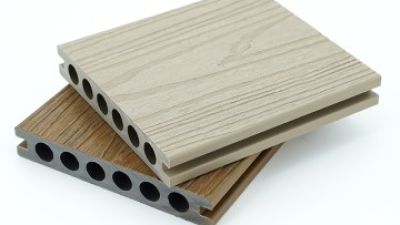
Factory waterproof WPC co-extruded solid decking boards are designed for outdoor spaces that require reliable performance in changing weather conditions. Made from a combination of wood fibers and plastic polymers, these composite decking boards offer a natural appearance while providing improved resistance to moisture, corrosion, wear, and everyday impact. The co-extruded protective layer helps shield the board surface from water penetration, stains, and fading, making it suitable for patios, balconies, garden paths, poolside areas, and commercial outdoor platforms.
The solid structure provides stable support under regular foot traffic, while the waterproof outer surface reduces the risk of swelling, cracking, and decay commonly associated with traditional wood. These boards are also environmentally considerate, as their production can reduce reliance on natural timber and support the use of recycled materials. With consistent dimensions and practical installation methods, they can be fitted with clips or suitable fasteners to create a neat, secure deck surface.
Routine maintenance is simple: regular sweeping and occasional cleaning with water and a mild detergent can help preserve the appearance. Unlike conventional timber decking, WPC co-extruded flooring generally does not require frequent painting, staining, or anti-corrosion treatment, helping reduce long-term maintenance work for residential and outdoor landscaping projects.
WPC panels combine wood fibers, thermoplastic polymers, and performance additives. They resemble timber but offer more consistent dimensions. Not quite natural wood.
They suit façades, partitions, ceilings, sheltered outdoor areas, and interior walls. Use depends on moisture, temperature, impact, and fire requirements. Location matters.
Coastal air requires moisture resistance and corrosion-resistant accessories. Hot sunlight may cause fading and expansion. Cold regions need suitable gaps for movement and freeze-thaw exposure.
No. Surfaces may fade, collect dust, or move with temperature changes. Clean them according to the specified finish. Expectations should remain realistic.
Solid panels generally provide stronger impact resistance in busy areas. Hollow panels reduce weight but need evenly formed internal ribs. Weak cavities can affect fixing security.
Embossed grain can hide minor scratches. Matte finishes may reduce glare on terraces and near hotels. Textured surfaces can collect dust in dry climates.
Follow the recommended movement gaps and protect cut edges when required. Keep panels dry before installation. Check wall thickness, screw-holding strength, ventilation, and joint details.
Request data for water absorption, UV resistance, impact strength, fire behavior, and dimensional stability. Compare physical samples in sunlight and moisture. Brochures can miss problems.
Yes. Check fire, smoke, wind, moisture, accessibility, and installation requirements in the target location. A qualified local professional should review the specification. Requirements can differ by city.
Confirm local recycling and disposal routes before installation. Polymer content may complicate handling. The environmental plan is often incomplete until local facilities are checked.
Choosing Paneles Wpc for global construction projects in 2026 requires a careful review of performance, compliance, and long-term value. Begin by understanding how wood-plastic composite panels support exterior walls, façades, interiors, and other applications. Define the project’s structural, aesthetic, maintenance, and budget requirements, then evaluate climate factors such as humidity, heat, freezing conditions, UV exposure, and coastal environments. Local building codes and performance standards should guide decisions from the beginning.
Compare panel compositions, core structures, dimensions, connection methods, colors, textures, and surface finishes to ensure they suit the intended installation. Durability, moisture resistance, fire behavior, environmental impact, recyclability, and expected service life are essential evaluation points. Project teams should also assess supplier reliability, technical documentation, certifications, production capacity, total costs, packaging, shipping, customs procedures, and delivery schedules. Before final specification, request samples, conduct relevant tests, confirm installation details, and prepare clear requirements for quality control. This systematic approach helps select safe, practical, and durable Paneles Wpc solutions for diverse international projects.