
 Hot Selling
Surface Design Is Becoming a Key Focus in the Next Generation of UV Marble Sheet
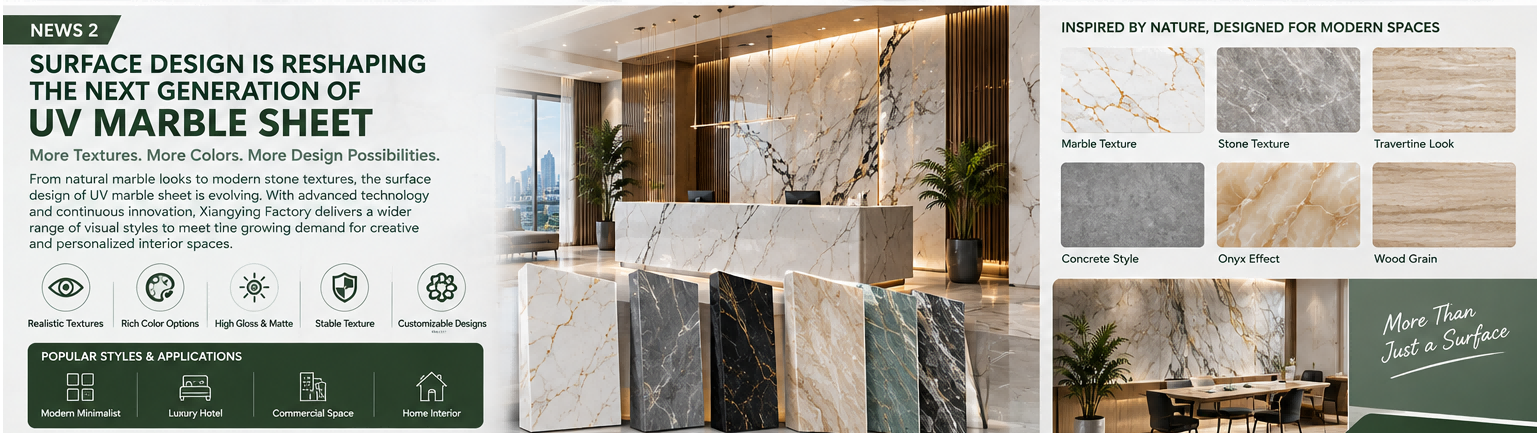
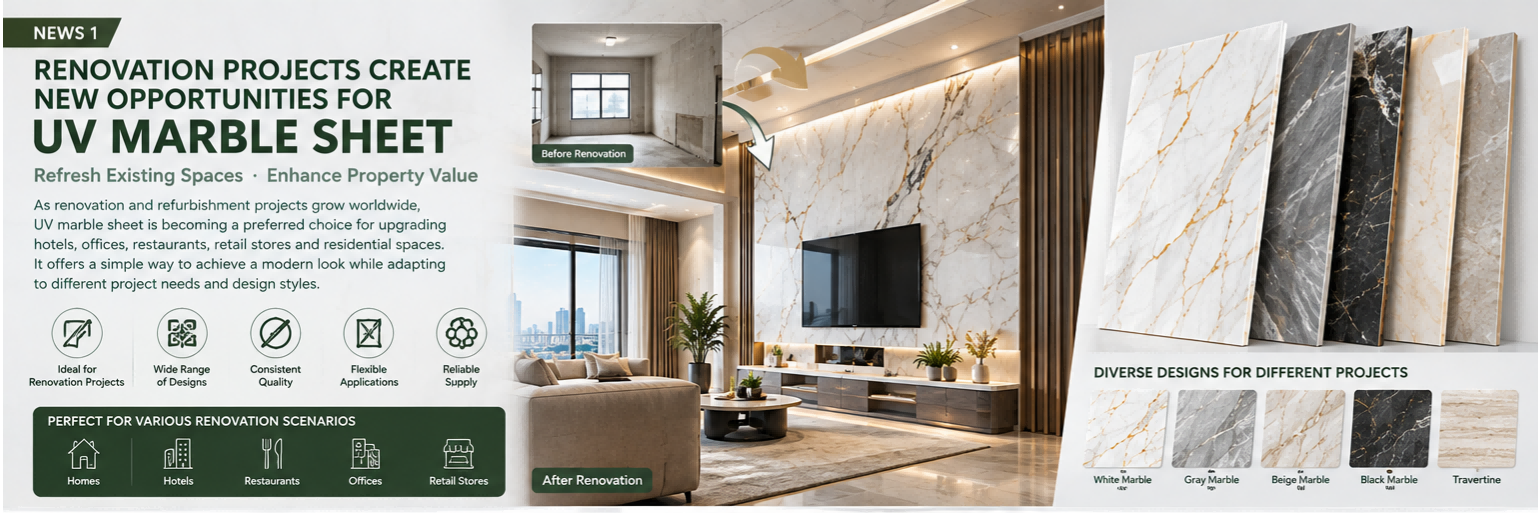
The decorative materials market is entering a period in which surface design is becoming just as important as the basic function of a product. Architects and interior designers are no longer limited to choosing between a small number of conventional wall finishes. Advances in printing, surface treatment, and manufacturing technology have created a much wider visual vocabulary for modern interiors.
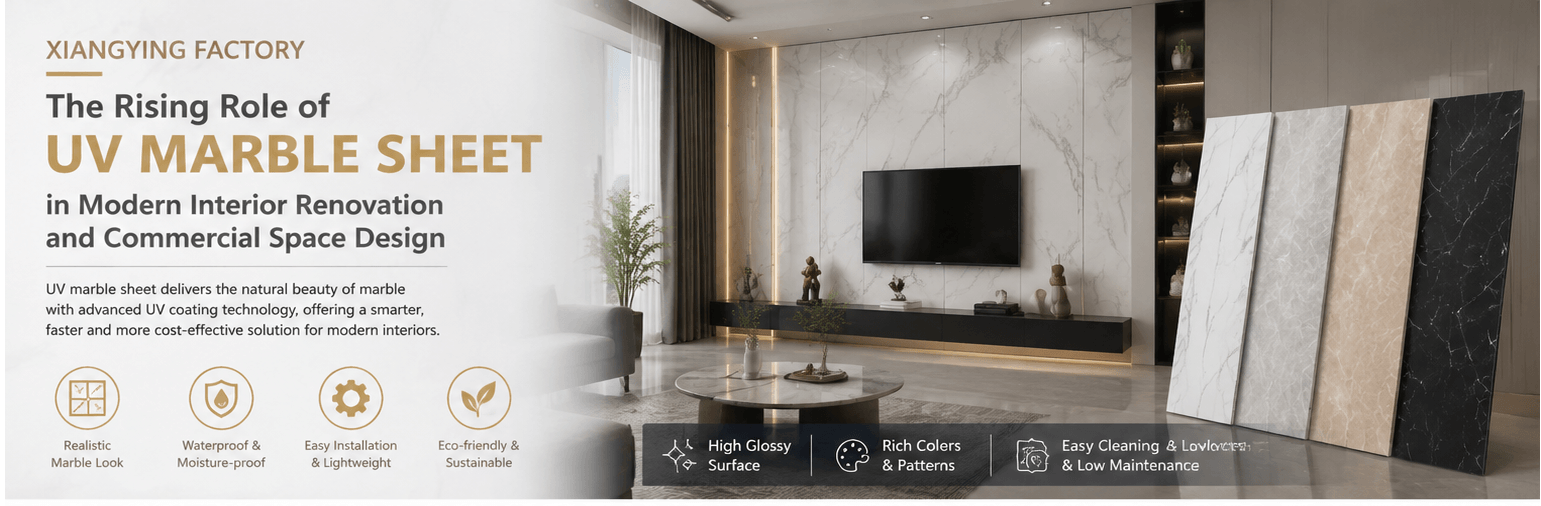
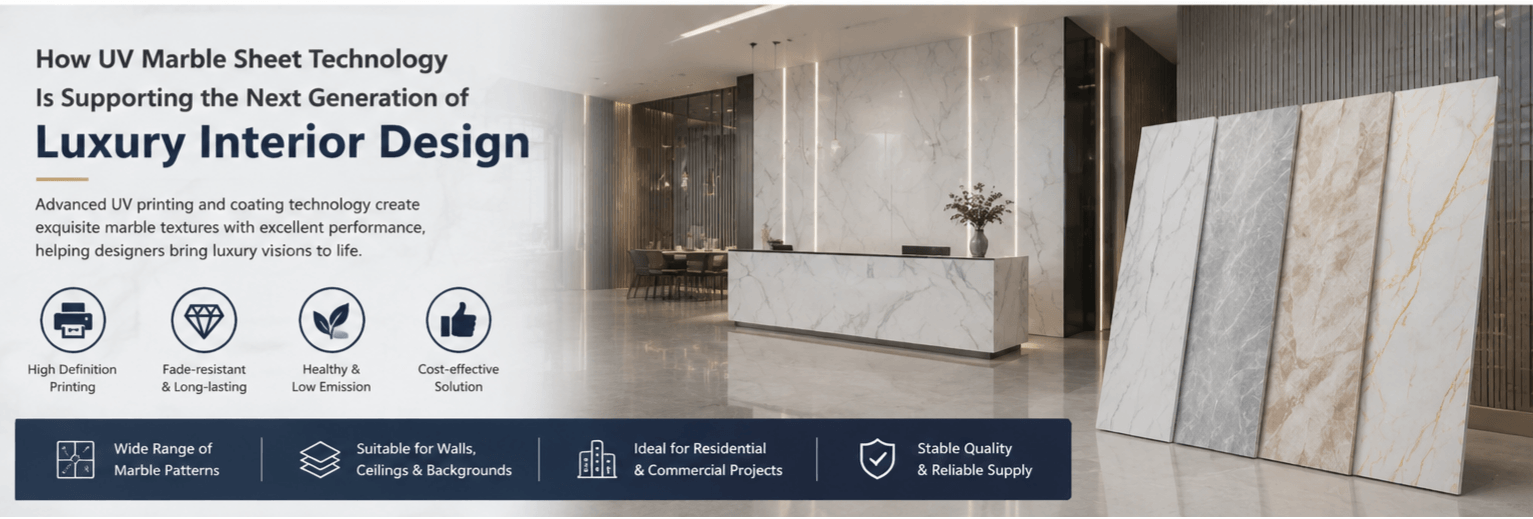
This change can be clearly seen in the development of UV Marble Sheet products. While marble-inspired patterns remain an important category, today's market is becoming more sophisticated. Customers are increasingly interested in the details of a surface, including the direction of the pattern, the visual depth of the stone texture, the balance between veins and background colors, and whether the final appearance fits a particular architectural style.
For manufacturers, this means that product development is moving beyond simply creating a “marble look.” The challenge is to understand how different visual elements influence the atmosphere of an interior and how these designs can be produced consistently for international customers.
Shandong Xiangying New Materials Technology Co., Ltd. has been following this evolution as part of its ongoing development in the decorative building materials sector. Xiangying Factory continues to pay attention to international interior design trends while improving its ability to manufacture decorative wall materials for different markets.
One of the most noticeable changes is the growing preference for more natural-looking stone patterns.
Earlier generations of decorative marble products often emphasized strong contrast and dramatic veins because customers wanted an obvious luxury effect. While these designs remain popular in some markets, many contemporary interiors are moving toward quieter surfaces with more controlled patterns.
Designers may choose a soft white background with subtle gray veins for a minimalist apartment. A warm beige stone effect may be selected for a hotel lobby. Darker stone patterns may be used as a feature surface in restaurants or entertainment spaces.
This diversification means that UV Marble Wall Panels are becoming part of a much broader design conversation.
Another important trend is the increasing interest in stone varieties beyond conventional white marble. Travertine-inspired textures, limestone effects, concrete-inspired surfaces, and other architectural stone references are appearing more frequently in contemporary interior design.
This does not mean that traditional marble patterns are disappearing. Instead, designers now have more choices.
The result is a more flexible decorative material market in which the same basic product category can support very different design concepts.
For Xiangying Factory, this development creates both opportunities and technical challenges. A successful decorative pattern must not only look attractive on a digital screen or sample board. It must also remain visually convincing when produced across a larger surface area.
Pattern continuity and overall visual balance are particularly important when panels are used across large walls. If the design is too repetitive, the finished surface may appear artificial. If the pattern is too strong, it may dominate the entire room.
These considerations make surface development an important part of the manufacturing process.
Xiangying continues to evaluate different decorative directions based on customer feedback and market demand. The factory's product development is increasingly connected with the preferences of international distributors, contractors, and interior decoration companies.
This is especially important because different regions often have very different opinions about what constitutes a desirable stone appearance.
Some markets prefer bright white marble with pronounced veins, while others favor beige, gray, or earthy tones. Certain customers are interested in high-contrast luxury patterns, while others are looking for understated surfaces that can coordinate with minimalist furniture and architectural details.
A manufacturer serving international markets therefore needs to maintain a broad understanding of regional design preferences.
The growing popularity of Marble Effect Wall Panels is also related to the changing concept of luxury. Contemporary luxury interiors do not necessarily depend on highly decorative surfaces everywhere. Instead, many designers use one or two visually strong materials and balance them with simpler surfaces.
This has increased demand for wall materials that can function as controlled architectural elements.
For example, a large marble-effect wall can be used behind a reception desk, while surrounding walls remain neutral. In a residential interior, a stone-inspired panel may be used behind a television or dining area rather than across the entire room. In a restaurant, a distinctive surface may be concentrated around the entrance or a particular seating zone.
This selective use changes how manufacturers should think about product design.
A successful pattern needs to work both as a complete wall and as part of a larger material combination.
Xiangying Factory has been observing this development and adjusting its product thinking accordingly. Rather than focusing solely on individual patterns, the company is paying greater attention to how different designs may fit into broader interior concepts.
Color coordination is one part of this process.
Modern interiors often use several materials together. Wood tones can be combined with stone textures, while metal and glass may be introduced to create contrast. Neutral colors can be used to balance stronger decorative surfaces.
This means that UV marble sheet designs increasingly need to work within a complete material palette.
Surface finish is another area attracting attention.
Customers may have different preferences for visual effects depending on the intended design style. Some projects require a stronger reflective appearance, while others favor a more restrained surface. The choice of finish can influence how lighting interacts with the wall and how the pattern is perceived from different angles.
For manufacturers, maintaining surface consistency becomes increasingly important as design expectations become more demanding.
Xiangying Factory continues to strengthen production management and inspection procedures to support stable product quality. For international orders, consistent appearance is particularly important because customers may use the same product across multiple rooms or different stages of a project.
The factory also recognizes that product development does not end when a new pattern is created. Market feedback after a product enters the market can provide valuable information about which colors, textures, and styles are actually attracting customers.
This feedback loop is becoming an increasingly important part of manufacturing development.
The international building materials market is highly competitive, and new decorative products appear continuously. For a factory, simply adding more patterns does not necessarily create long-term competitiveness. The more important question is whether those patterns respond to real market demand and whether the manufacturer can produce them with stable quality.
This is where factory experience becomes valuable.
Shandong Xiangying New Materials Technology Co., Ltd. is continuing to combine production experience with market observation. The company follows international trends while also using feedback from overseas customers to identify potential areas for product improvement.
The future of UV Decorative Wall Panels is likely to involve greater visual diversity rather than one dominant style. Customers will continue to request marble effects, but the definition of marble itself may become broader as designers explore different stone references and combinations.
At the same time, digital visualization is making customers more familiar with international design trends. A homeowner or contractor can now discover an interior style from another country and look for materials that reproduce a similar atmosphere in a local project.
This creates new opportunities for manufacturers that can respond quickly to changing preferences.
For Xiangying Factory, keeping up with these developments means continuously observing the market rather than relying entirely on established product designs. Production technology, surface development, quality management, and customer communication all need to develop together.
The evolution of UV marble sheet demonstrates a broader transformation taking place across the decorative building materials industry. Materials are increasingly judged not only by their physical characteristics but also by how effectively they support architectural expression.
As designers continue to experiment with stone textures, neutral palettes, contrasting materials, and controlled decorative surfaces, UV marble sheet products will have opportunities to occupy an increasingly diverse range of interior spaces.
Shandong Xiangying New Materials Technology Co., Ltd. will continue following these developments and improving its manufacturing capabilities. By connecting factory production with international design trends and customer feedback, Xiangying is working to ensure that its UV marble sheet product development remains aligned with the changing needs of the global decorative materials market.
The next generation of decorative wall materials will not simply reproduce familiar patterns. It will offer designers more freedom to create spaces with different moods, textures, and visual identities.
For manufacturers, the ability to understand these changes and translate them into consistent products will become increasingly important. Xiangying Factory is continuing along this path, keeping its product development connected to the evolution of the international interior design market.